Paintless Dent Repair or PDR is one of the most common and easy methods of dent repair. This method was developed by technicians to make fixing some of the more common problems in auto-vehicle repair easy. It’s a fairly simple process, but customers rarely have information regarding it which makes them skeptical of the entire process. Today, we will break down the process so that the next time you require dent repair, you’re not confused regarding the process at all.
What Are the Steps to PDR?
PDR is a relatively simple process, and most technicians break it down into three main steps that have various degrees of complication depending on the type of dents incurred on the car’s body.
1. Estimation
The technicians will examine the car’s body and configure the number of dents and identify the dents they can apply PDR on. They also take this time to understand the time and cost for the repair so they can present this estimate to the customers.
2. Repair
The technicians will conduct the repairs according to the problem that they’ve identified. Each repair is different, and the technicians plan the work according to each repair.
3. Results
Technicians will bring in the customers so they’re aware of the aesthetics and functionality of the vehicle after their repairs. This is a time for the customer to voice any issues or concerns regarding the repairs conducted by the technicians.
Types of Techniques Used by a PDR Technician
PDR technicians don’t just use one method to fix a customer’s car. There are two main techniques that most PDR technicians apply depending on the leverage they wish to create for the dent. The technique that they use depends largely on the position and depth of the dent. Sometimes, it’s easy to pull out a dent using one method instead of the other. Other times, it’s up to the technician’s discretion.
We have listed the two techniques below:
1) PDR using Metal Contact
The most common method of PDR is using metal rods and body picks. Technicians use this method to pop out the dent from the underside of the body’s panel. This method is easier to orchestrate for many as there’s not a great degree of leverage that one needs to work on the panel’s underside.
2) PDR using Glue Pull Repair
Glue Pull Repair or GPR works by pulling out the outer panel of the car’s body. Technicians use glue and specially designed glue tabs to create an outward pull to pop out the dent. Technicians have to be very careful of the temperatures of the glue and the panel so that nothing goes awry.
Benefits of Repairing Dents at Sioux Falls Dent Repair
Here, at Sioux Falls Dent Repair, we have ARC-certified technicians for PDR and hail damage. Our main goal is to take care of you and ensure that your car gets the best service it needs. Once your car is in our body shop, you can stop worrying about it.
We promise you clear communication, so you know everything we’re conducting on your car and ensure you’ll get your car looking as good as new.
Dent Repair on Your EV with an IMI Accredited Technician is a Must
Your electric vehicle is less likely to get into accidents because of all the computerized sensors it has. However, accidents don’t always occur when the car’s on the road. Sometimes, they can occur even when you’re car is carefully parked in the driveway. Dent and dings on electric vehicles hurt your wallet a lot more than dents on a normal car. What’s more concerning is that there are very few auto-repair shops with IMI accredited technicians to help your electric vehicle.
Read on as we tell you how you can save money on dent repair through paintless dent repair and why IMI accredited technicians are the best choice for you.
What Is PDR?
Paintless Dent Repair or PDR is a non-invasive method of fixing dents and dings on your electric vehicle. It’s a method that auto-technicians prefer due to the ease with which they can do it. It doesn’t involve any extra paint or extra material, which is why it’s so popular. It doesn’t involve any cutting or scrapping of metal and thus saves both you and the auto-technicians a significant amount of time.
How Does it Work?
The PDR process is fairly simple. You bring the car into the auto-shop. Your accredited IMI technician will look at the dent or dent if they’re more than one to assess how many of them, they can perform PDR on. They will then give you an estimate based on this assessment. After you’ve consented to the estimate and the procedure, the certified technician will get to work. The procedure involves the use of special tools and techniques acquired through years of experience to pop out the dents on the body of your electric vehicle. Once they’ve done this, they further look into the body of the vehicle to ensure that they’re not missing anything. Once they’ve done this, you can pay and have your car back in your garage.
Benefits of PDR
There are many advantages to this process, and we have listed some of them below:
1. It helps retain your car’s value
Paintless Dent Repair doesn’t involve any extra material, which means that your car’s value will not depreciate based on this procedure.
2. Insurance companies cover PDR.
Your electric vehicle is already going to be heavy on your wallet for other reasons. Since insurance companies cover PDR, you don’t have to worry about paying for this procedure out of your wallet.
3. They’re environmentally friendly
Paintless Dent Repair doesn’t involve any wastage by scrapping material. It doesn’t use paint which means that no harmful chemicals are released into the environment.
Why Choose Sioux Falls Dent Repair for Your EV needs?
Sioux Falls has IMI accredited technicians who have years of experience with electric vehicles. We have worked on the bodies of cars like Tesla Model 3, Tesla Model X, Nissan Leaf, Audi e-Tron, or EV Ford Mustang.
You must take your electric vehicle to certified IMI accredited technicians for many reasons. We have listed a few of them below:
1. It’ll cost you less
IMI accredited technicians know what they’re doing and thus are likely to botch the job.
2. You’ll get quality of service.
IMI accredited technicians train for years so that they can achieve finesse, you’ll get the best work possible.
3. They are reliable.
Since they’re accredited and claim to be too, they’re held to a higher standard. This standard means that you can rely on them to put the best work forward.
Here at Sioux Falls Dent Repair, our main priority is the customer. Don’t believe us? Come on down to our shop and let us sort you out.
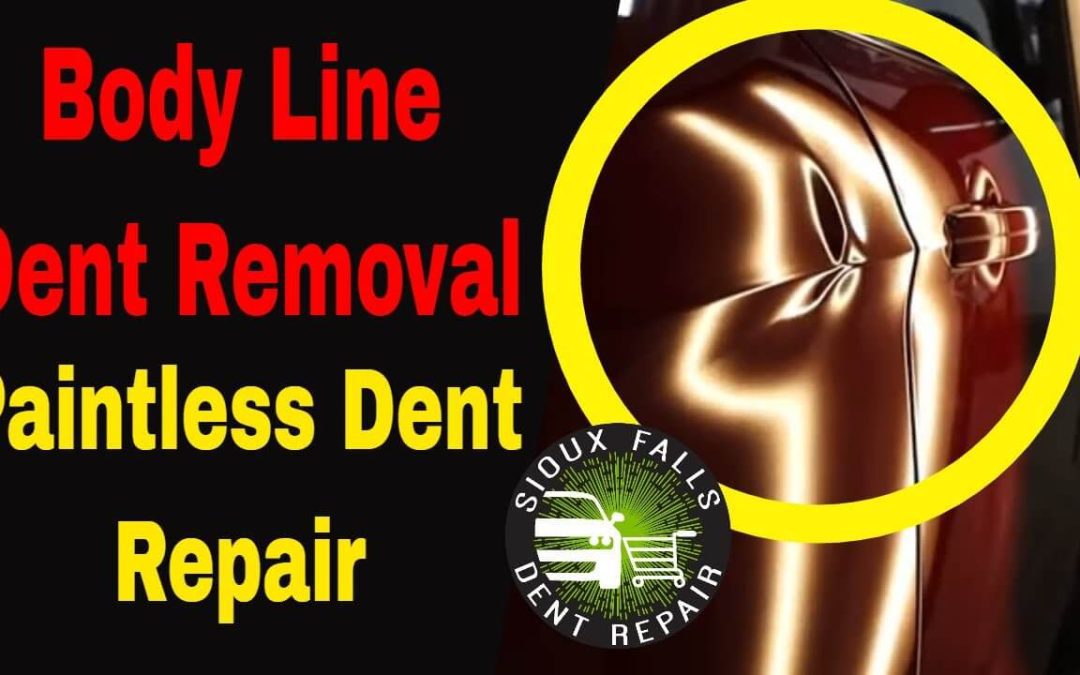
Today we are removing some damage in a 2018 Ford Edge using paintless dent repair. This damage is in the right rear door and is very extreme damage. The damage is on a body line and very deep and has a bunch of displaced metal all around the area. In order to remove this damage we had to use a heat gun and apply a constant 160-180 degrees when pushing out the last little bit of this damage.
Have similar damage and want to call or text us: Click Here
Paintless dent repair, also known as PDR, is an environmentally friendly way of repairing a dent. With the help of PDR, you can easily restore your car into its original shape without destroying the factory paint or the protective layer on top of it.
The paintless dent repair process usually consists of four vital steps. If you’re getting hail repair done from a certified technician, they’re probably going to perform these four steps for dent removal.
Damage assessment
Entering the dent
Looking/Evaluating the dent
Applying slow pressure to remove the dent
The PDR Process
Every day our certified technicians work on all kinds of vehicles to make car owners happy. The best part about the PDR process is that it doesn’t hurt your wallet that much, and it’s very quick. To understand how the PDR process works, read on!
Damage Assessment
Initially, the certified technician working on your car will first evaluate the dent so they know how serious the damage is. The severity of the dent can also decide how much time the technician will need to remove the dent.
In most cases of PDR, the dent removal process can take just a day. But if the dent is too big, the certified technician might take more than a day.
Examining the Dent
When a technician is done looking at your vehicle after the initial stage, they’ll plan how to enter the dent so they can fix it. In most cases, expert technicians enter a dent from the back so they can slowly massage the car’s body back into its original form. However, if that is not possible, the technician might try to “pull” out the dent from the front. This, however, depends on the car accident that occurred, and the damage the car has sustained.
Taking a Better Look
Certified technicians at Sioux Falls Dent Repair can also use a special light to look at the dent so they could understand it from their point of view. The light can show them shadows of the dent. This can, in turn, tell them which part they’ll have to focus on particularly.
Applying Slow Pressure
Once the technician has understood what they need to do to repair the dent, they carefully utilize their tools to massage the exterior of your car’s body so it can be restored back to its original state. In most cases, the PDR process can be completed on the same day the car comes to our shop.
What Can’t Be Fixed With PDR?
Even though dent repairs can be made very convenient with the PDR process, there are some car accidents for which PDR is not recommended. For example, if your car got a scratch or an abrasion, PDR can’t help in this case.
In a case like this, touching up will be necessary, and your car might need a repaint.
Conclusion
If your car got in an accident and you’re looking for dent removal – Sioux Falls dent repair can help. Our certified technicians can ensure that your car is back in the shape it originally was without compromising the original paint.
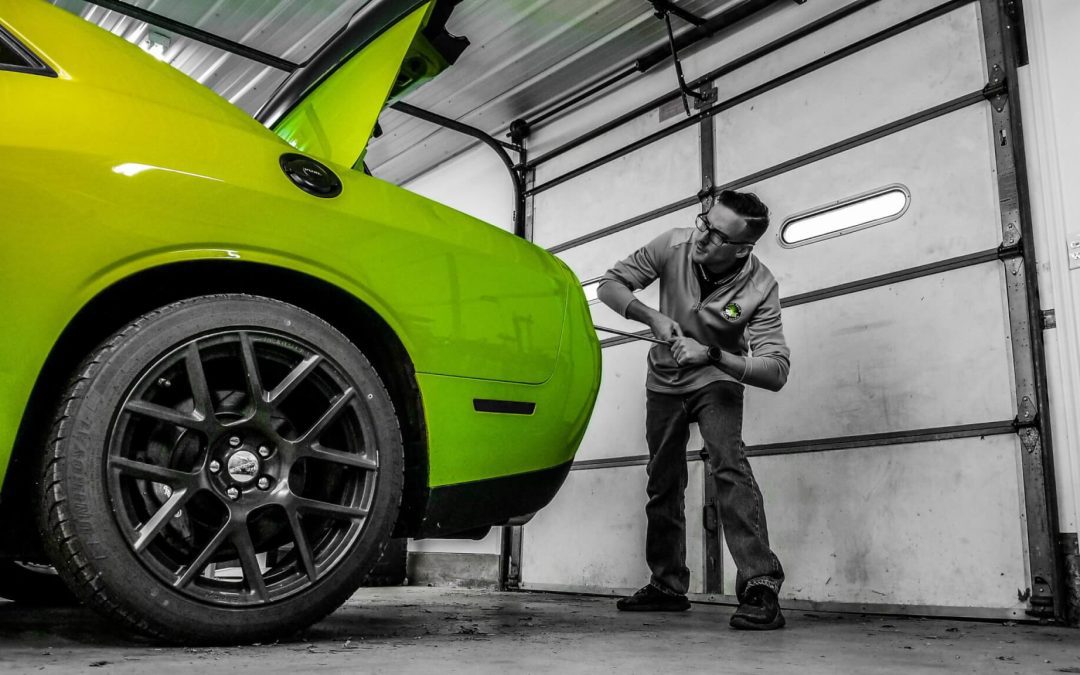
Back again for another paintless dent repair and here we are going to show you some of our big dent removal techniques on this Dodge Challenger Scat Pack edition. This vehicle was brought to us with some tree limb damage. Yes that is right, a tree company was unfortunately cutting down some tree branches above this car and during the process they fell all over this vehicle. This caused damage all over including the hood, fender, roof, roof rails, trunk lid but today we are focusing on just the quarter panel damage.
What Tools Did We Use?
We started off these repairs by gaining access to the backside by removing the interior trim panels in the trunk. From there we remove the tail light and work through the wiring access hole for the tail light. The first tool we used was actually an Ultra Dent Tools double bend tool with an interchangeable tip and extension. We start off a repair like this with a bigger ball style tip. From there we slowly downsize the tip size to get more precision pushes. Towards the end of the repair the damage actually started to slightly oil can, shown in the video. The panel is very flimsy and movable with just minor pushes with our fingers. We knew we had to tighten the metal up so we started by using some electronic tools.
Electronic Dent Removal?
In this repair towards the end of the repair like stated prior we had to resort to using some electronic style tools for this repair. What we are using is the steel hotbox machine from Betatag. This tool uses electromagnetic heat induction to heat up the panel. We heat up the panel with this tool to a safe temperature that will NOT damage the paint finish. From there we then spray the area with a cold spray. This method of quickly heating the metal and quickly cooling the panel is nothing new to metal workers. What this does is tighten up the molecules in the metal making it shrink. This shrinking action tightens up the metal so it does not remain flexible after the finished repair. Say for instance we DID NOT do this, the panel make at some time be pushed in from say someone leaning on the vehicle or a high pressure car wash for instance. More than likely with this minor stretched metal it will not stick inwords looking like a dent but it could happen so we must take special precautions to prevent this.
Finishing it up
In the end we were able to remove not only this damage but damage all over the vehicle from the tree limbs. We use only the paintless dent repair method for our repairs and no painting, body fillers or primers were used in these repairs. Be sure to Subscribe to our Youtube channel to see other repairs we performed on this vehicle coming soon.